





NEW EXHIBITION
Across the Sea
October 15 – December 22, 2026
Opening Reception: Thursday October 15, 6-8pm (Remarks by Amy G. Poster at 6:30pm)
Since our inauguration in 2006, the gallery has played a leading role in introducing international audiences to KOGEI: a unique category within Japanese art defined by exceptional craftsmanship, a profound engagement with material, and the transformation of centuries-old traditions into contemporary forms of visual expression. Marking its twentieth anniversary and its ongoing commitment to advancing global appreciation of the field, we are proud to present Across the Sea, a major exhibition of KOGEI opening October 15.
Bringing together ten of Japan’s most accomplished KOGEI practitioners, Across the Sea offers a compelling survey of contemporary practice across generations and disciplines. Through ceramics, metalwork, lacquer, and other media, the exhibition demonstrates how these artists build upon inherited techniques while pursuing highly individual creative visions. Their works reveal a dynamic field in constant dialogue with its past, challenging conventional boundaries between craft and fine art.
Despite the diversity of approaches on view, the artists share a commitment to pushing the expressive possibilities of their materials. Together, their works underscore the remarkable vitality of contemporary KOGEI, demonstrating how traditional processes continue to generate fresh aesthetic languages and new forms of artistic inquiry.
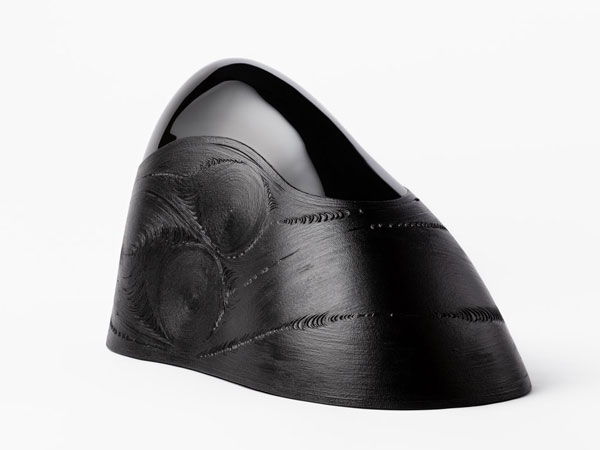
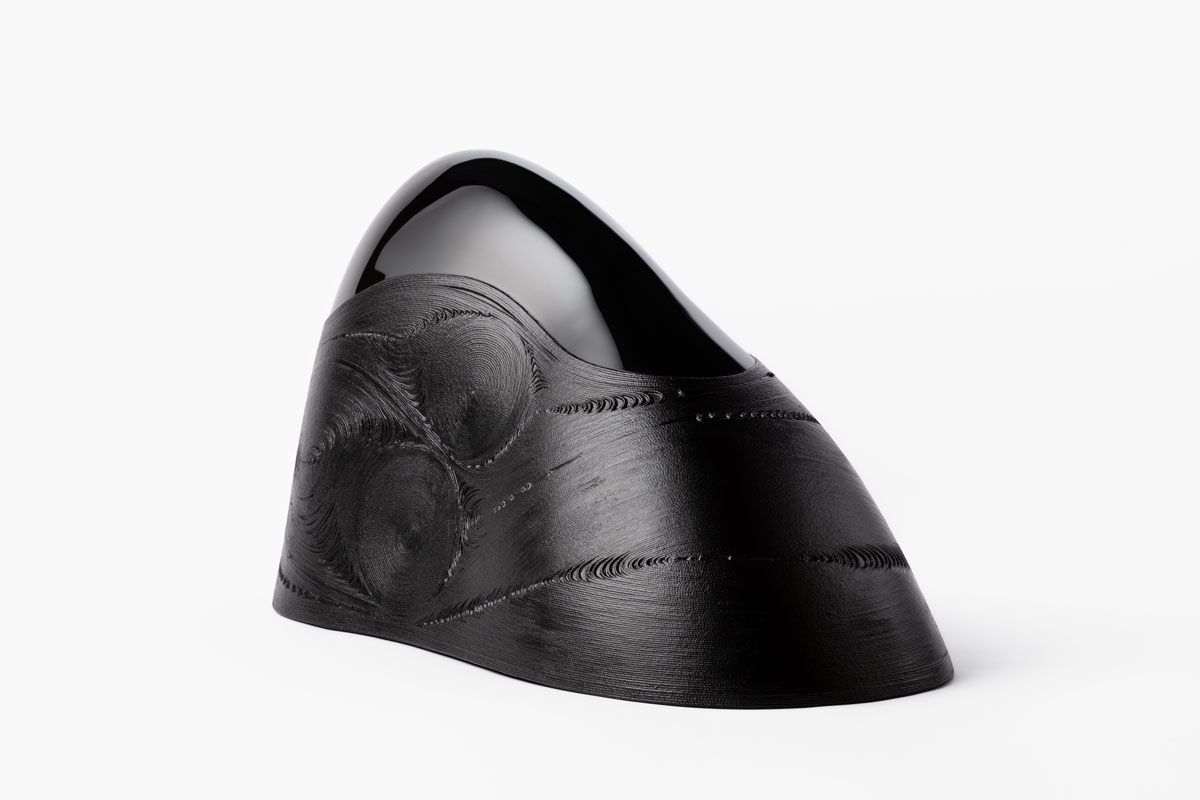
Among the exhibition’s standout artists is metalwork specialist Ōsumi Yukie (b. 1945), a Living National Treasure renowned for elegant vessel forms created through an exacting hammering process and enriched with delicate applications of metal leaf. Suggesting wind, clouds, and the movement of water, her luminous surfaces transform traditional metalworking into objects of striking contemporary beauty. Representing a younger generation, Rusu Aki (b. 1976) wields her blowtorch on fragments of industrial iron, creating sculptural works shaped by rust, oxidation, and elemental processes of transformation. In lacquer, Onihira Keiji (b. 1973) evokes celestial expanses through surfaces enriched with gold, silver, crushed quail eggshell, white-lipped oyster shell, South Sea abalone, and other materials of extraordinary complexity, while Noguchi Ken (b. 1982) builds rhythmic concentric patterns across sculptural forms, producing shimmering black surfaces that recall the movement and depth of the sea.
Ceramics, long central to our exhibition program, are represented by works from Ōhi Toshio Chōzaemon XI (b. 1958) and Kaneshige Kōsuke (b. 1943). Ōhi’s ship-shaped water jar, derived from a form first developed in the seventeenth century, provided an important point of departure for the exhibition and resonates with our longstanding mission of carrying KOGEI beyond Japan’s shores. Kaneshige’s From the Sea series, which reimagines the ancient Bizen stoneware tradition through sculptural invention and subtle humor, provided the inspiration for the exhibition’s title.
More than an anniversary event, Across the Sea offers an opportunity to encounter artists whose work is redefining perceptions of Japanese art both at home and abroad. United by technical mastery, material sensitivity, and an unwavering commitment to creative exploration, they demonstrate that tradition remains not a constraint but a dynamic source of artistic possibility. Together, their works reveal a field in continual transformation and one whose influence is increasingly resonating beyond Japan.
With Across the Sea, we reaffirm our commitment to championing Japanese KOGEI internationally, inviting collectors, curators, scholars, and the wider public to engage with a remarkable group of artists whose works embody both cultural continuity and contemporary vision.
We are delighted to welcome Amy Poster, Consulting Curator of Asian Art at the Museum of Fine Arts, Houston, and former Chair and Curator Emerita of the Brooklyn Museum’s Department of Asian Art, who will offer opening remarks at the reception.
We look forward to welcoming you soon!
To learn more and view the works, click here,
PAST AUTUMN ASIA WEEK NEW YORK EXHIBITION
Across the Sea: Onishi Gallery with Homo Faber
September 10–30, 2026
Opening Reception: Thursday, Sept 10, 5-8pm
Gallery Talk by Xiaohan Du: Saturday, Sept 12 at 3pm
Special AWNY Autumn Hours (Sept 10–19): Open daily, 10am-5pm
Text by Xiaohan Du
“Homo faber suae quisque fortunae.”
(Every person is the maker of their own fortune.)
—Appius Claudius Caecus, 3rd century BCE
To celebrate our 20th anniversary, we are pleased to present a special exhibition bringing together the work of ten artists, four of whom will also participate in the 2026 edition of Homo Faber on the Island of San Giorgio Maggiore in Venice this September. Homo Faber, meaning “human as maker,” embodies in many ways the inner spirit that drives artistic creation. The exhibition brings together works in ceramics, metal, lacquer, and other media, each possessing its own distinctive material language and engaging in a profound dialogue with its maker.
As an art historian who has long observed, studied, and reflected on art, I have returned again and again to the same question: Why do human beings create art? Ultimately, the answer points to a quality shared by artists: they become artists not simply by choice, but by necessity. In other words, they possess an almost existential need to engage with their chosen medium.
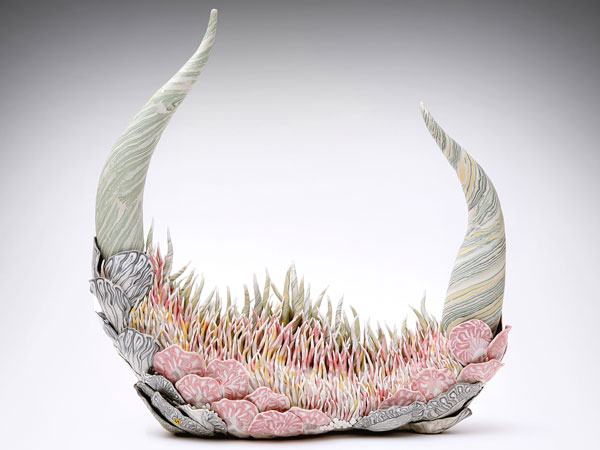
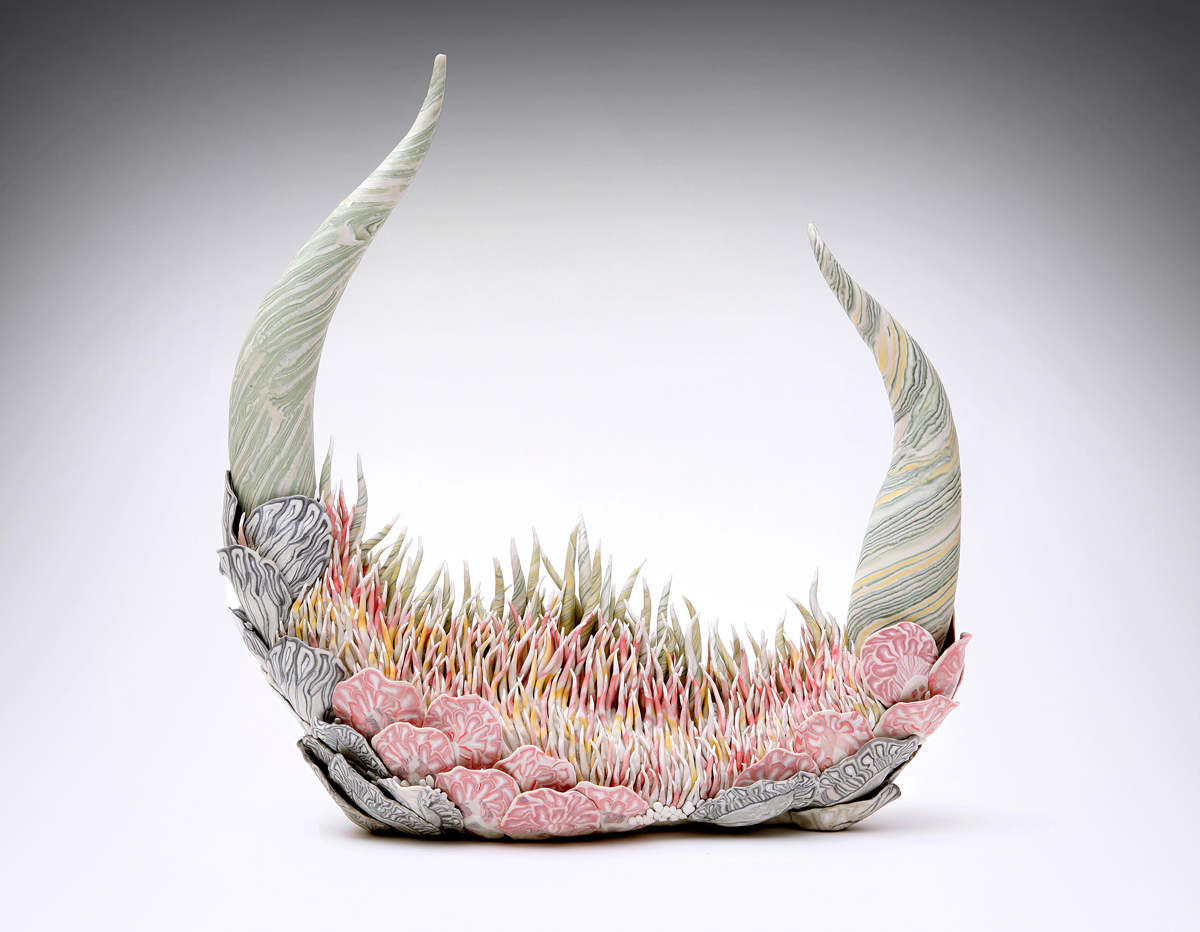
As Kaneshige Kosuke (b. 1943) shapes iron-rich Bizen clay into vessels, he is simultaneously engaged in a dialogue with the material. Rusu Aki (b. 1976) wields a welding torch to join delicate fragments of metal, evoking Prometheus wielding the legendary flame. Konno Tomoko (b. 1967) layers countless tiny, hair-follicle-like forms to create ceramic works filled with seemingly infinite imagery. Onihira Keiji (b. 1973) employs gold, silver, crushed quail eggshells, white mother-of-pearl, South Sea abalone shell, and other materials to recreate the cosmos within his lacquer works. Noguchi Ken (b. 1982) constructs sinuous, concentric waves across gracefully curved and richly rounded lacquer forms. Their layered, luminous black surfaces evoke the profound imagery of the ocean embedded within the Japanese cultural psyche.
Through the media they have each chosen, these artists quietly express a shared conviction: in the process of creating art, human beings are also shaping themselves. Perhaps this is what sustains the creatively productive tension between Homo Faber—the maker—and Homo Sapiens—the human being.
Participation in this year’s Homo Faber exhibition marks an important milestone in our 20-year history and ushers our longstanding mission to promote and support Japanese kōgei into a new phase. Many of the artists in this exhibition have encountered aesthetic ideas and perspectives outside their own traditions. These encounters have prompted them to reconsider the traditions of Japanese art and transform them into forms of contemporary artistic expression.
This fall, their works will cross the seas, appearing in both New York and Venice and encountering audiences from around the world.
We look forward to welcoming you soon!
About Xiaohan Du
Xiaohan holds a PhD in Art History from Columbia University. Her research examines Sino-Japanese exchanges from the eighth to the fourteenth centuries. Xiaohan currently serves as the John H. Foster Assistant Curator of Pre-Modern Asian Art at the Asia Society Museum.
To learn more, click here,
About the Gallery
Since its opening in 2005, Onishi Gallery has featured contemporary Japanese artists who work in a range of media, including ceramics, metalwork, lacquer, glass, sculpture and painting. These artists are united in their common embrace of tradition in the creative process, and they are distinct in their exquisite and diverse modes of expression. Onishi Gallery merges the past with the present through the presentation of historically rich explorations of traditional art forms and ambitions experimentations in new formats in the center of the international contemporary art scene in New York City.
The Japanese Government has designated several artists that Onishi Gallery represents as Preservers of Important Intangible Cultural Properties, more commonly known as “Living National Treasures.” The Minister of Culture considers locality, tradition and the perpetuation of historic techniques when awarding this title to artists. Once an artist is recognized as a Living National Treasure, their profile publicized on a national and global level, dramatically increasing the value of their work. Many of these artists have works that are included in the permanent collections of major museums, such as the Metropolitan Museum of Art, the British Museum, the Smithsonian Institution, and the Worcester Museum of Art. The system aims to not only celebrate and preserve the historic artistic traditions of Japan, but challenge living artists to continuously improve and incorporate their own individual style while still mastering their craft.


